Identifying Service Improvement opportunities for MITRE’s Innovation Toolkit (ITK)
Streamline workshop process that increased revenue and exceeded customer expectations
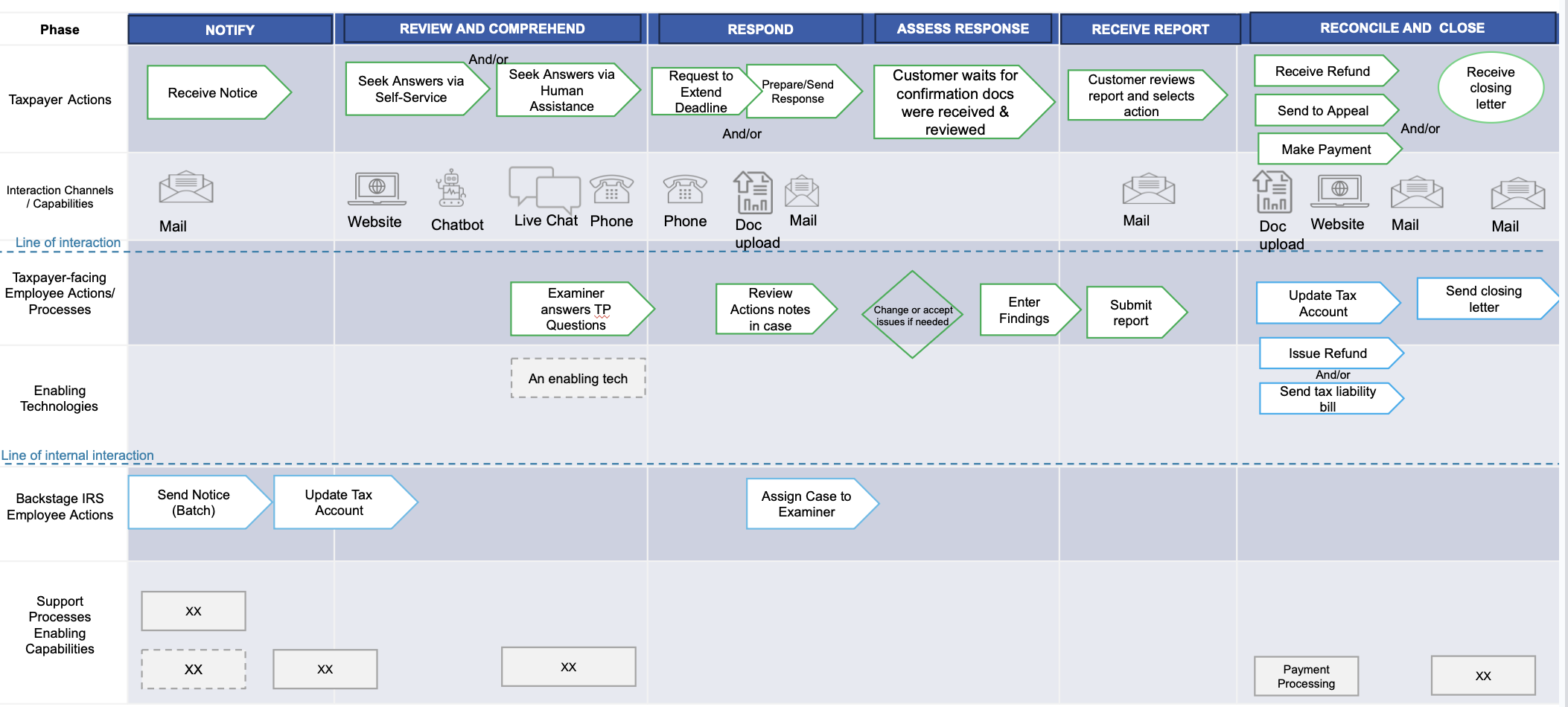
A federal government financial services agency’s Online Department requested a Compliance Service Blueprint to visualize the customer compliance experience and understand how the agency’s case management system shaped that journey.
Although the initial request was simply for a single artifact, deeper conversations revealed that the agency was actually looking for ways to:
Break down organizational silos
Better coordinate internal systems
Explore service design as a long-term capability
What began as a request for a blueprint evolved into a strategic engagement that lead to the buy-in from Senior leadership to create a service design capability within the organization.
-
The Online Department approached our team with an assignment to develop a service blueprint for one of their most critical customer tasks within the financial compliance process. Decision makers believed that mapping this journey could help internal teams “come together and eliminate silos,” but they had difficulty articulating the Problem::
Why a service blueprint was the right tool
How the case management system fit into broader organizational workflows
What success would look like beyond an artifact
The request reflected a common pattern in large federal organizations: a tactical ask masking a strategic need.
-
The request reflected a common pattern in large federal organizations: a tactical ask masking a strategic need.
Outcomes
-
Design evolved from a tactical function to a strategic partner capable of defining problems, aligning teams, and informing long-term planning.
Built momentum
Introduced methods and tools
Garnered leadership interest
Laid the foundation for future capability-building
-
The project helped leadership recognize that improving compliance required more than system upgrades; it required:
Service design methods
Cross-team collaboration
Systems thinking
-
The blueprint exposed:
Hidden dependencies
Gaps in system integration
Inefficiencies in case handling
Barriers to customer experience
-
Teams that rarely collaborated now shared a single source of truth and aligned understanding of how their work influenced the compliance experience.
Service Blueprint was briefed to the Director and it generated momentum for expanded service design discipline and tools development.
Although full capability, building efforts slowed due to DOGE constraints, the project established a clear pathway and demonstrated organizational readiness for a service design practice in the future.
Approach
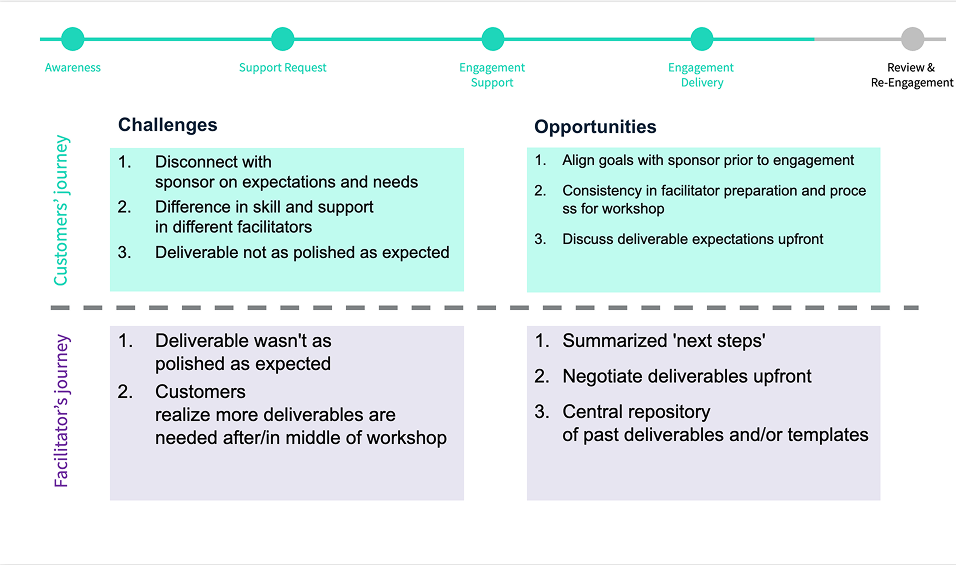
Review of existing workshop materials, contracts and delivery processes.
Conduct interviews with service providers and customers (internal and external)
Discovery and Research
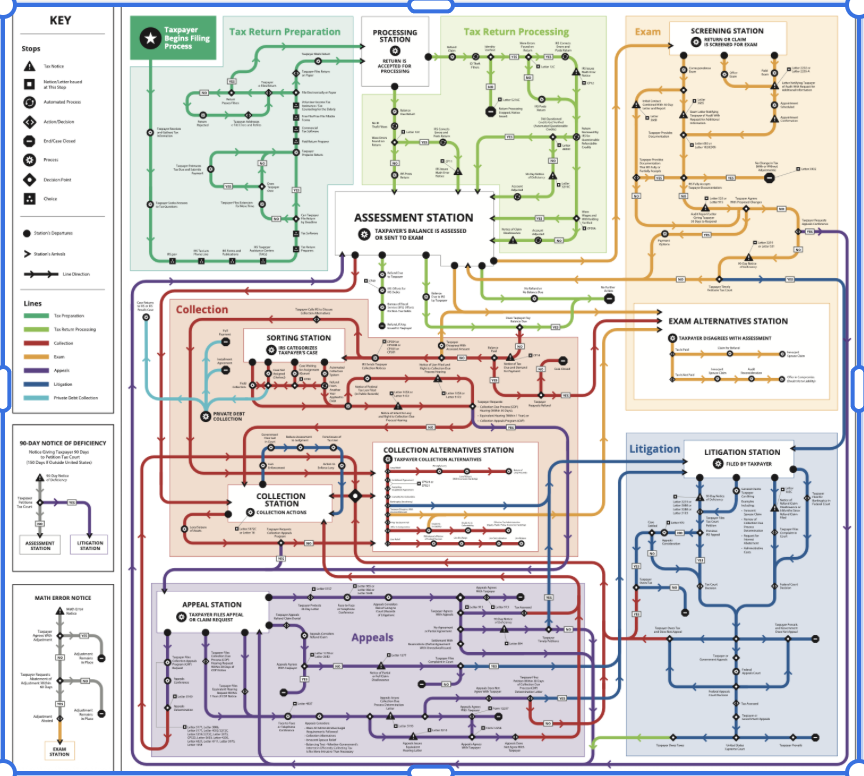
Current state service blueprint
Identification of breakdowns, redundancies and risks
Service Mapping
Future state service blueprinting
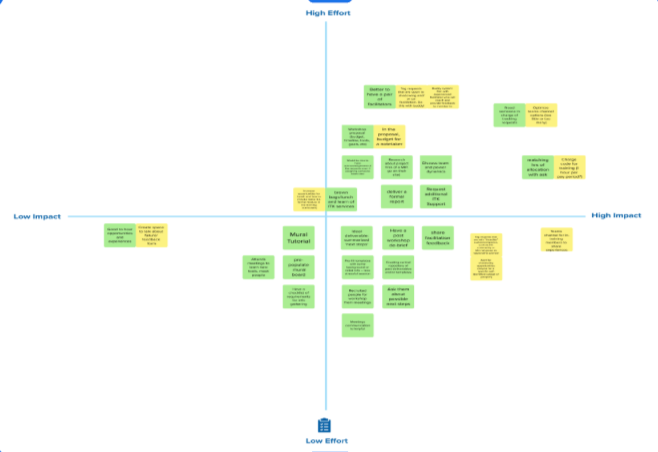
Cross-functional workshop (action prioritization based on effort and impact)